
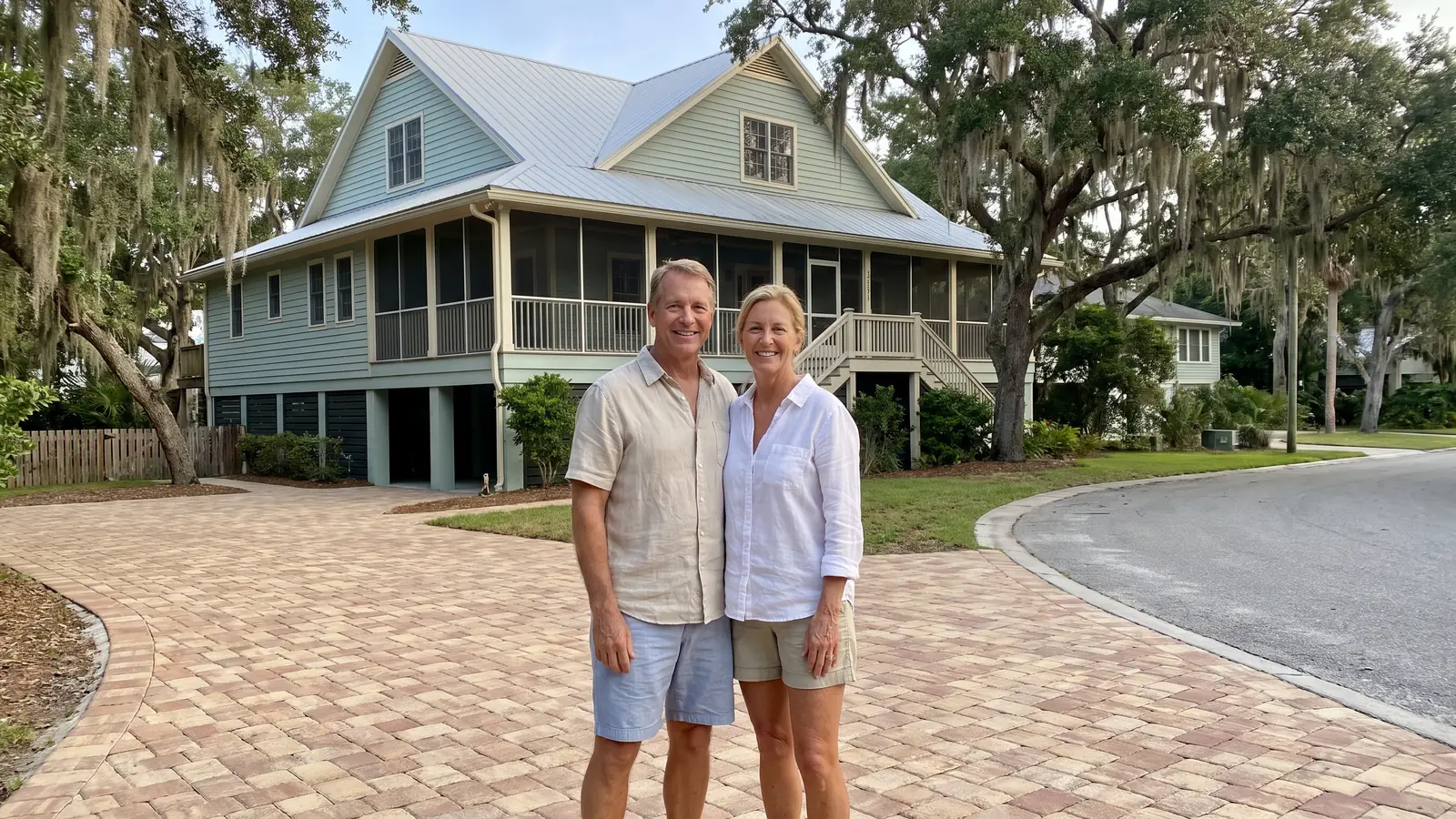
Paver sealing for Eastside homes
Paver Sealing in Eastside, FL
Some Eastside lots are only 25 feet wide, so a careful paver wash matters; call (904) 932-1301 for a free look.
- Brings out deeper paver color
- Fresh joint sand helps lock pavers in place
- Gives weeds less room to grow
- Makes the surface easier to keep clean
- Free estimate, no obligation
Request a Free Estimate
Free, no obligation.
Fast, careful paver sealing in Eastside
Paver sealing on the Eastside comes with a free estimate from a local contractor, for front walks, driveways and back patios. After you get a free estimate online, the reply should come within 1 business day, usually much sooner. Nothing is booked until you say so, and you are free to compare other bids.
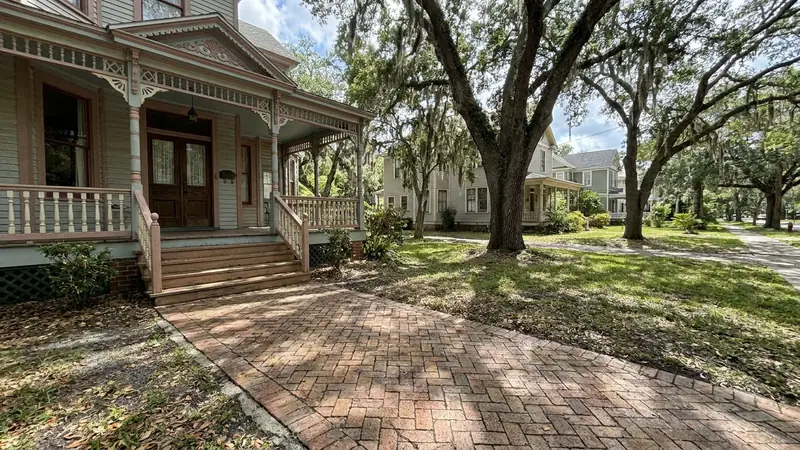
Picture a short paver walk from the sidewalk to a wood porch, with gray film on the stones and grass pushing up through the joints. After a gentle wash, new joint sand and a fresh coat, the walk looks clean and tidy again, right up to the steps. A small patio out back can get the same work on the same visit. To talk it over before anyone visits, call (904) 932-1301 and tell the contractor what you see.
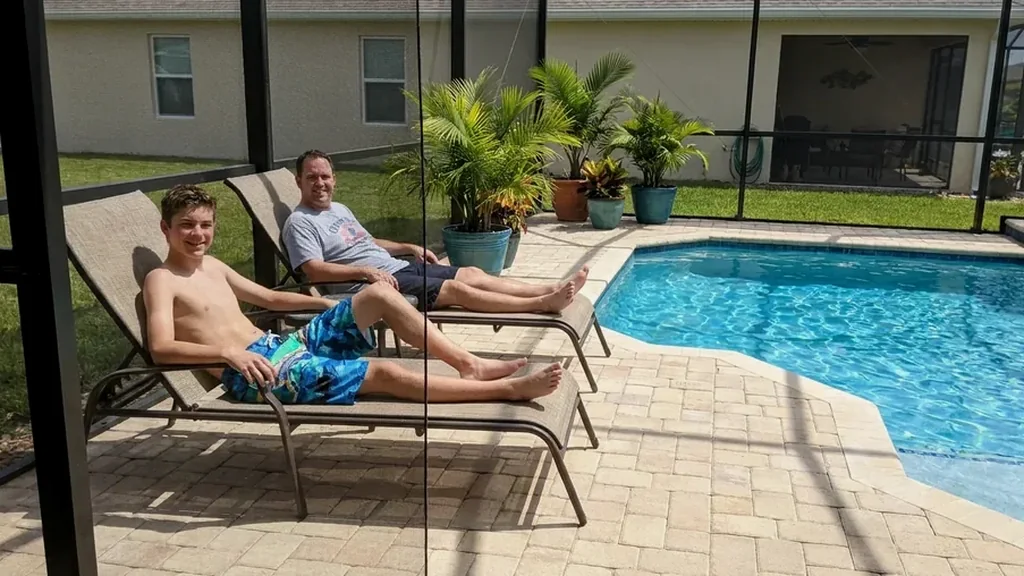
Why hire a local paver sealing contractor in Eastside?
Eastside homeowners tend to look for a contractor who is careful around older wood homes and tight lots. To hear how that applies on your block, get a free estimate online.
A free visit first
The contractor looks at your Eastside walk, driveway or patio in person and gives you a clear price, with no charge for the visit.
The going rate, in writing
First Coast companies commonly publish $1.75 to $3.25 per square foot to clean, sand and seal. Use that range to check any quote you get.
Care near wood and neighbors
Older wood homes and narrow lots call for gentle rinsing and careful aim near the walls, and the plan accounts for both from the start.
Your choice at every step
You pick the finish and the date, and you decide whether to go ahead at all. An Eastside estimate comes with no obligation.
Get Your Free Estimate in Eastside
Tell us about your pavers in Eastside.
Free, no obligation
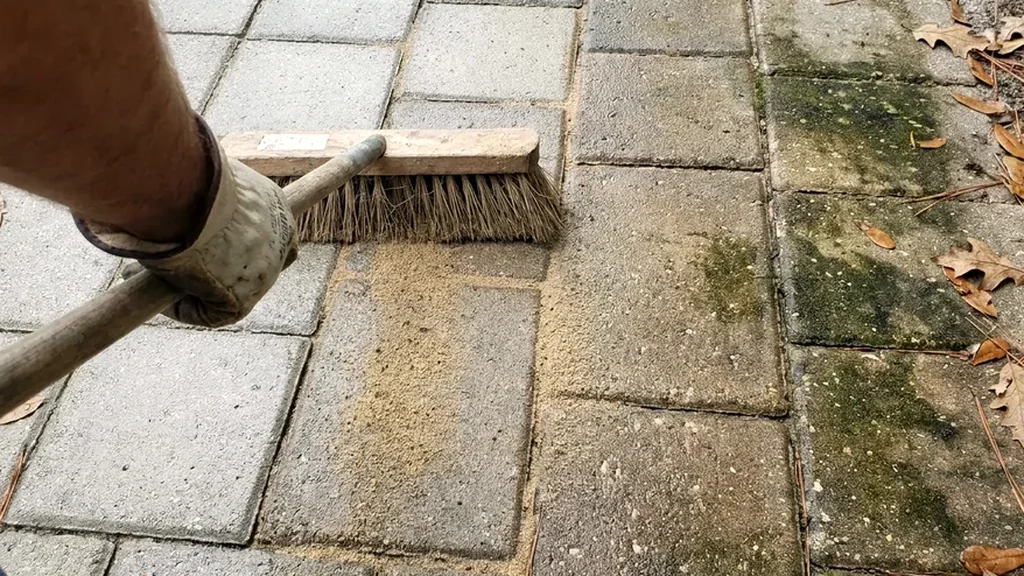
What paver problems show up most in Eastside?
Tight lots and walls right beside the pavers
Some Eastside lots are only 25 feet wide, inside blocks about 250 feet across. On a lot that narrow, pavers often run right up to the house, the fence and the neighbor's yard. Every bit of rinse water and cleaner has to be aimed with care. A careless wash can push dirt onto siding or into a neighbor's flower bed. The plan for a tight lot starts with where the water will go.
Wood homes next to wet work
Most Eastside homes are frame vernacular or bungalow style, and many are wood. Six shotgun houses on Oakley Street, for example, sit snugly side by side. Pavers that meet a wood porch or wood siding call for lower pressure and careful rinsing at the edges. Water forced into old wood is the last thing a cleaning job should leave behind.
Sand that leaves with summer storms
Duval County sits on deep, fast-draining sand, and Jacksonville averages about 52 inches of rain a year. The bulk of it arrives between May and September, often as sudden downpours. When joint sand washes out, the gaps widen and soil drifts in. Weeds follow soon after. New sand and a coat of sealer help the joints hold through the next season. Where an edge restraint has slipped, the joints can widen even faster.
Green growth in shaded corners
Moss and algae need heavy shade and damp pavers to get started. On the Eastside, close-set houses can shade a side walk for most of the day. That narrow strip between two homes is where green film tends to show up first. A full cleaning has to take it all off before sealing. Otherwise the coat traps the stain underneath.
Mystery coats on older walks
The Eastside's main building years ran from 1868 to 1947, so most pavers came long after the houses. Over that time, more than one owner may have sealed them with different products. Water-based sealer cannot go over solvent-based sealer, so the old coat has to be identified first. Peeling, patchy shine or a cloudy film are all signs it needs work. Keep any old product names you find, since they can settle the question quickly.
Does the Eastside historic district change how pavers get sealed?
The sealing itself works the same way, but it pays to check the rules first. The Eastside was accepted to the National Register of Historic Places in 2023. The district runs from the Arlington Expressway north to Seventh Street, and from Cemetery and Palmetto Streets east to MLK Parkway. If your home sits inside those lines, mention it when you get a free estimate online.
The City of Jacksonville requires a Certificate of Appropriateness for exterior work in its local historic districts, and it lists driveways as an example. Its page does not mention sealing by name, and a national listing is not the same as a local district. You can check your address on the city's Land Development Map under the Historic layers. Once you know where you stand, call (904) 932-1301 to set up a visit.
Housing here is mostly frame vernacular and bungalow homes, built during the neighborhood's main era from 1868 to 1947. Lots can be as narrow as 25 feet, so walks and patios tend to be small and close to the walls. That means careful work near wood siding and porches matters more than speed. To get a price for your walk or patio, get a free estimate online.
What does paver sealing cost in Eastside?
First Coast paver companies commonly list $1.75 to $3.25 per square foot for a clean, re-sand and seal. On the Eastside, green growth in shade, missing sand and an old coat to strip are what move a job up in that range. A clean, open driveway tends to land lower. For a number based on your pavers, get a free estimate online, and the estimate is free.
Size and access matter as well. A short walk on a 25-foot lot has less area, but the careful hand work near walls and fences takes time per foot. Gear may have to come through a side gate, and pavers that need resetting add to the total too. Call (904) 932-1301 and the contractor can explain what affects your total.
| Paved area | Typical example | Clean, sand and seal |
|---|---|---|
| 300 sq ft | Small patio or walkway | $525 to $975 |
| 600 sq ft | Two car driveway | $1,050 to $1,950 |
| 1,000 sq ft | Large driveway or pool deck | $1,750 to $3,250 |
| 1,500 sq ft | Driveway plus pool deck | $2,625 to $4,875 |
Math based on the $1.75 to $3.25 per square foot that Northeast Florida paver companies published as of November 2026. Your contractor sets the actual price after seeing the surface. Repairs, leveling and stripping failed sealer are usually extra.
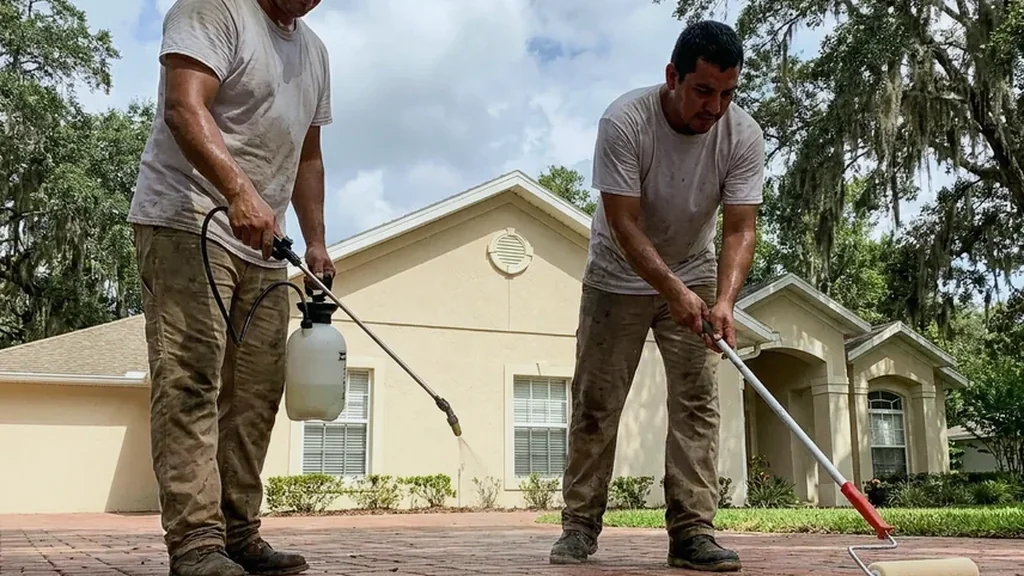
How does a paver sealing job work in Eastside?
Look at the lot and the old coat
The contractor walks your Eastside lot to see where water drains and what sits next to the pavers. Sunken spots get noted, since one Jacksonville company says sealing locks in whatever is there. The old sealer gets identified, because water-based products cannot cover solvent-based ones. Anything that needs repair is fixed before cleaning starts. Tell the contractor about any past flooding on your block, too.
Clean gently near wood
Washing comes next, with lower pressure and careful aim near wood porches, siding and fences. Grime, green growth and stains come off, and oil or rust spots are pre-treated. Rinse water is kept out of neighbors' yards and away from the foundation. Plants along the edges are covered or wetted down as the work moves along. The goal is a clean surface without harm to the house next to it.
Refill the joints
Washing pulls sand from the joints, so new sand goes back before sealing. On Duval County's sandy ground, open joints let soil in and give weeds a place to grow. The joints are filled and swept, so no loose sand ends up trapped under the coat. Low spots get a second look at this stage. Colored joint sand is sometimes offered if you want the lines to stand out against the stones.
Let every corner dry
Sealer needs a dry surface, and shaded strips between houses dry last. One Jacksonville company says most coats that turn white went onto damp pavers or went on too thick. A careful contractor checks those shady corners and the forecast before starting. If rain rolls in, the date moves. Waiting a day is better than a cloudy coat that has to be stripped.
Seal and stay off
Next the sealer goes down in the finish you chose, sprayed on and then rolled into the joints. Foot traffic can usually come back within a few hours, one Jacksonville company says, while cars wait about a day. On a front walk, plan another way in until it cures. Ask how long your coat should last. Keep sprinklers off the fresh coat until the contractor says it has cured.
Complete paver services in Eastside
An Eastside job runs in four steps: wash, re-sand, dry and seal. The wash lifts grime and green growth from the stones, and fresh sand fills every joint the rinse empties. The sealer goes on last, once the pavers are dry all the way through. To ask how long each step takes on a small lot like yours, call (904) 932-1301.
Front walks run from the sidewalk to the porch and take foot traffic every day of the year. Side walks between close-set houses stay shaded and go green first. Driveways and back patios round out most jobs, and all of them can be done on one visit. Tell the contractor which surfaces you have when you get a free estimate online.
Sealer comes down to water-based or solvent-based, and matte or wet look. If an earlier owner used solvent-based, water-based cannot go on top, so the old coat decides first. A wet look deepens color but shows scuffs sooner, while matte keeps a quieter look beside an older bungalow. Call (904) 932-1301 to talk it through for your Eastside home.
Most rain here falls from May to September, often in quick, heavy storms. Shaded strips between houses can stay damp well after the rest of the lot has dried, and sealer needs a dry surface. November through April is the drier stretch of the year. To find a date that fits your street, get a free estimate online.
Questions to ask before you hire
- Would you show me how the sealer looks on a few pavers before you do the rest?
- Before the job starts, can I have a copy of your insurance and the license number this work needs?
- Once the job is done, how should I reach you with a question?
- Should the sprinklers be off the night before, and for how long afterward?
- Do you offer a shiny finish and one that keeps the pavers looking natural?
- Is the price you quoted for the whole job, with the washing and sand, or are those extra?
- What happens if an afternoon storm rolls in while the sealer is still wet?
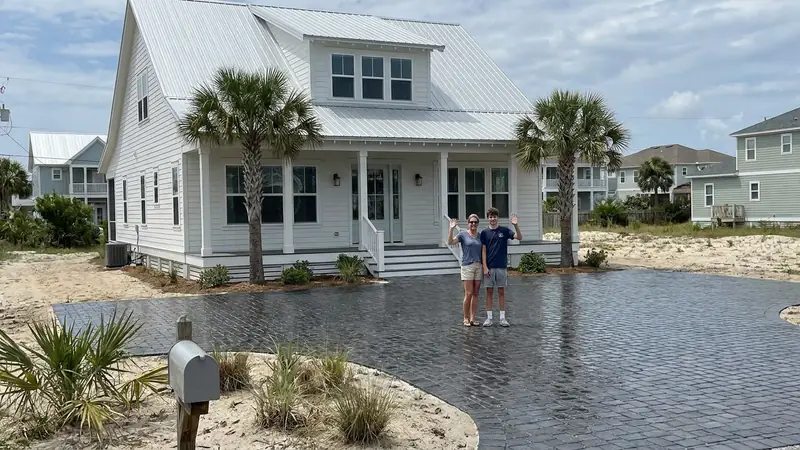
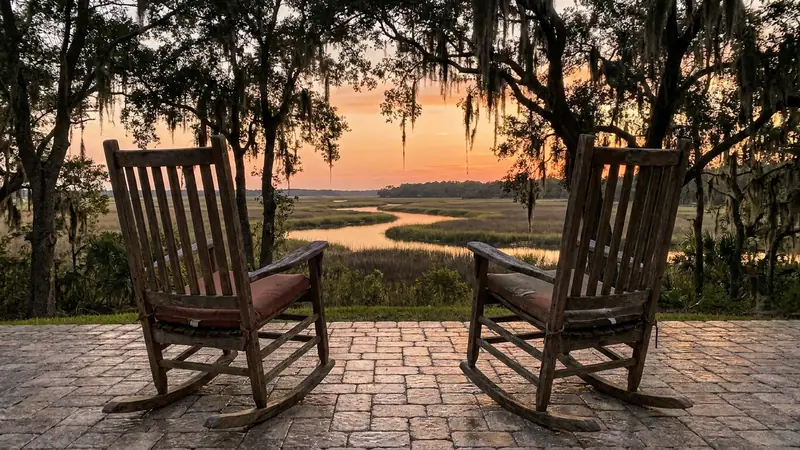
What do sealed pavers look like around Eastside?
Why local matters in Eastside
A contractor who works the Eastside knows the lots are small and the houses close together. That shapes where the gear goes, where rinse water runs and how much care the edges need. A crew used to big suburban drives may not plan for it. To find a contractor at home on these narrow streets, call (904) 932-1301.
Historic status is another local detail. The Eastside joined the National Register in 2023, and the city has separate rules for its own local districts. A contractor who works here can remind you to check the Land Development Map before work starts. You can get a free estimate online and ask what other Eastside homeowners have had to check.
Older wood homes round out the picture. Frame vernacular houses, bungalows and shotgun homes all call for gentle work where the pavers meet the walls. A contractor who sees these houses often knows to keep pressure low near old wood. If that sounds like your place, get a free estimate online, with no obligation to hire anyone.
Does it help to hire someone who knows the Eastside's history?
Yes, because the age of a block tells a contractor what to expect on and around its pavers. Oakland was platted in 1869 and joined Jacksonville in 1887, along with Fairfield. Oakland Park opened on July 4, 1918, as the city's first playground for African-American children. If you live near the park and your walk needs work, get a free estimate online.
Florida Avenue, which took a new name in 1995, was the old commercial street. Matthew Gilbert Middle School dates to 1926, and the Brown Eastside Branch Library opened in 1961. Churches such as Mount Olive AME, built in 1921, still anchor the blocks. Near any of these Eastside landmarks, call (904) 932-1301 and name your street.
Frequently Asked Questions
Why is paver sealing on the Eastside priced the way it is?
The price pays for three jobs: a deep wash, new joint sand and the sealer. Around the First Coast, companies commonly publish $1.75 to $3.25 per square foot to do all three. Careful hand work near wood walls and fences on a small Eastside lot can add time.
How much is paver sealing for an Eastside home?
Plan on $1.75 to $3.25 per square foot, which is what First Coast companies commonly publish for a clean, sand and seal. The total depends on how many square feet you have and their condition. Ask for the measured area in writing so you can compare quotes.
How long does paver sealer last on an Eastside walkway?
On the Eastside, as elsewhere, companies commonly quote two to five years from coat to coat. A Jacksonville company puts film-forming sealers at 3 to 5 years and penetrating sealers at about 5 to 7. A shaded walk or a busy driveway tends toward the shorter end.
Is it better to spray or roll sealer on Eastside pavers?
Most contractors do both: they spray the sealer on and then back-roll it. One Jacksonville company says spraying gives even coverage and rolling works the sealer into the joints without puddles. Near wood porches, ask how the edges will be handled.
Does the Eastside historic listing affect sealing my pavers?
It might, so check before work starts. The city requires approval for exterior work, including driveways, in its local historic districts, but its page does not name sealing. Look up your address on the Land Development Map and ask city staff if you are unsure.
Can pavers next to a wood-frame Eastside house be cleaned safely?
Yes, with lower pressure and careful aim near the walls. Most homes here are frame vernacular or bungalow style, and many are wood. Point out where the pavers meet the porch or siding so the contractor can plan the edges.
Will sealing fix sunken pavers on my Eastside walk?
No, sunken pavers have to be reset before sealing. A Jacksonville paver company points out that a coat of sealer holds every dip just as it is. Point out any low spots at the first visit so they can be fixed first.
How long do I stay off freshly sealed pavers?
A few hours is usually enough before walking on it, and about a day before parking, one Jacksonville company says. Shade and damp air can stretch that. If the job is your only front walk, plan another way into the house for the day.
Can sprinkler water stain pavers on the Eastside?
It can if the sprinklers draw from a private well. According to University of Florida experts, iron-heavy well water is common in Florida and tends to leave orange marks when used for irrigation. Point out any orange streaks so they get treated before the sealer goes on.
Is a small Eastside front walk worth sealing?
Often it is, since a short walk takes the most foot traffic on the lot. New sand and a coat of sealer help the joints hold through summer storms and keep weeds down. Ask whether a driveway or patio can be added on the same visit.
Why did the sealer on my Eastside walk turn cloudy?
The usual cause is sealer laid on damp pavers or too thickly, one Jacksonville paver company says. Shaded strips between houses are where that usually happens. Stripping the hazy layer may be needed before resealing.
Ready for a Free Estimate in Eastside?
Call (904) 932-1301 and tell us about your pavers.
Free, no obligation