
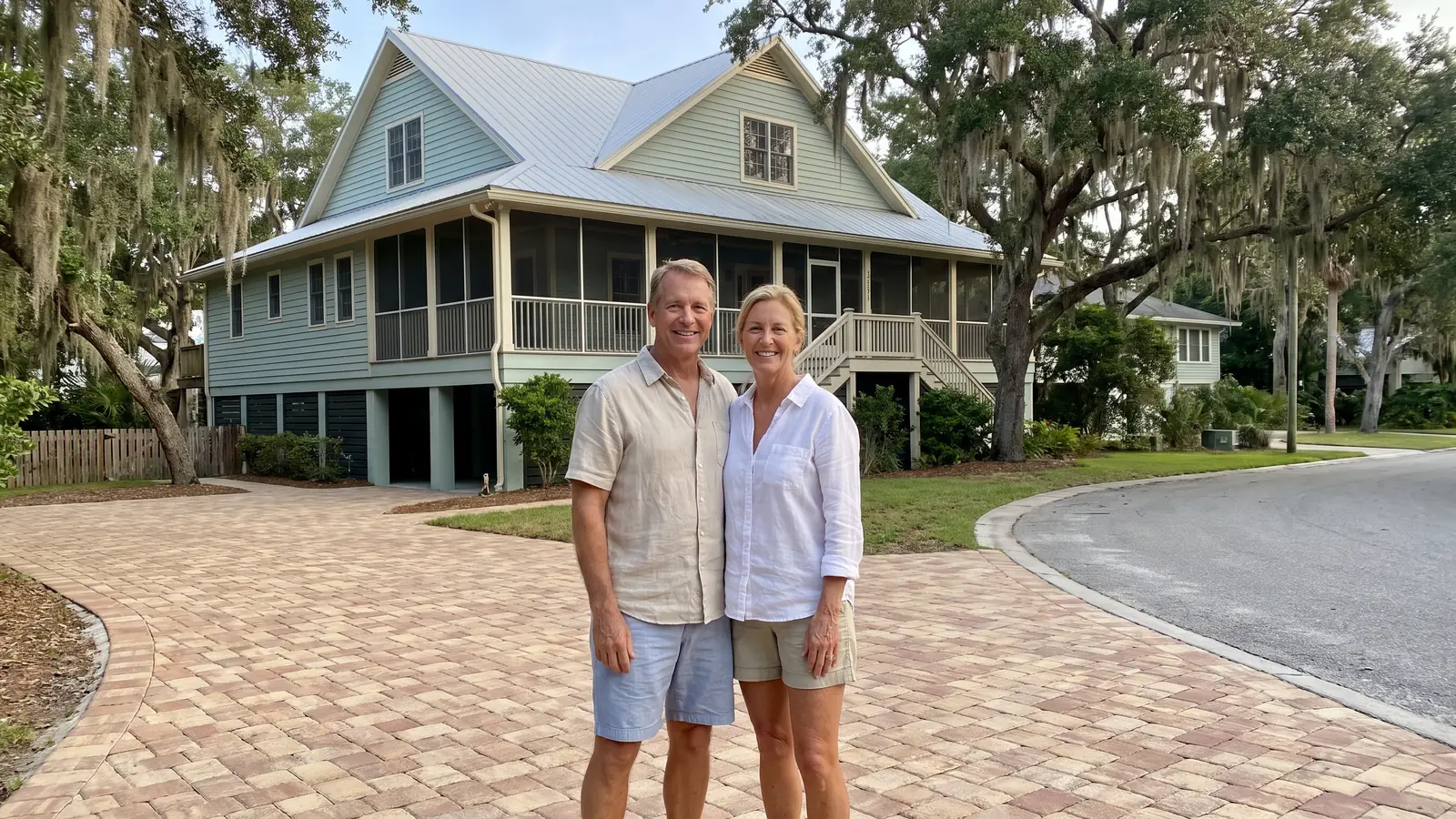
Paver sealing for San Marco homes
Paver Sealing in San Marco, FL
If oak roots have lifted your San Marco walk, call (904) 932-1301 to have it leveled and sealed.
- Brings out deeper paver color
- Fresh joint sand helps lock pavers in place
- Gives weeds less room to grow
- Makes the surface easier to keep clean
- Free estimate, no obligation
Request a Free Estimate
Free, no obligation.
Fast, careful paver sealing in San Marco
Paver sealing in San Marco is available for courtyards, front walks and driveways, from the blocks near the Square to Colonial Manor and South Riverside. The estimate from a local contractor is free, and a San Marco homeowner hears back within 1 business day, usually much sooner. You can get a free estimate online with no obligation to go ahead.
Maybe your front walk has a ridge where a root pushed up, and brown leaf stains have soaked into the joints. Once the low spots are reset, the stains are treated and a fresh coat goes on, the walk reads as one smooth, even surface again. Rain runs off instead of soaking in. Call (904) 932-1301 and describe what you are seeing.
Why hire a local paver sealing contractor in San Marco?
San Marco homes went up over decades, from the first buildings of 1926 to lots still selling in the 1940s. A contractor who knows that range can fit the plan to your house, so get a free estimate online when it suits you.
Free look at roots and stains
The contractor checks your San Marco pavers for lifted spots, leaf stains, low joints and old sealer. The estimate itself is free.
Know the going rate
Northeast Florida companies commonly publish $1.75 to $3.25 per square foot to clean, sand and seal. Use that to judge any San Marco bid.
A finish for an older front
Natural keeps pavers quiet beside a house from the 1920s or 1930s. A wet look adds depth and shine, but it shows tire scuffs sooner.
No pressure to book
You choose the date, the finish and whether to hire anyone at all. A San Marco estimate carries no obligation of any kind.
Get Your Free Estimate in San Marco
Tell us about your pavers in San Marco.
Free, no obligation
What paver problems show up most in San Marco?
Oak roots lifting walks and drives
The Treaty Oak on the Southbank spreads its crown 147 feet. When the city built a boardwalk beneath it in 1994, footers were moved whenever a root turned up. Big oaks send roots well past the trunk, and San Marco parks such as Largo Well Park and FEC Park still hold oaks. A walk near an older tree can rise in ridges, and those pavers need resetting before any coat goes on. Sealing over a ridge only keeps the trip edge in place for the next few years.
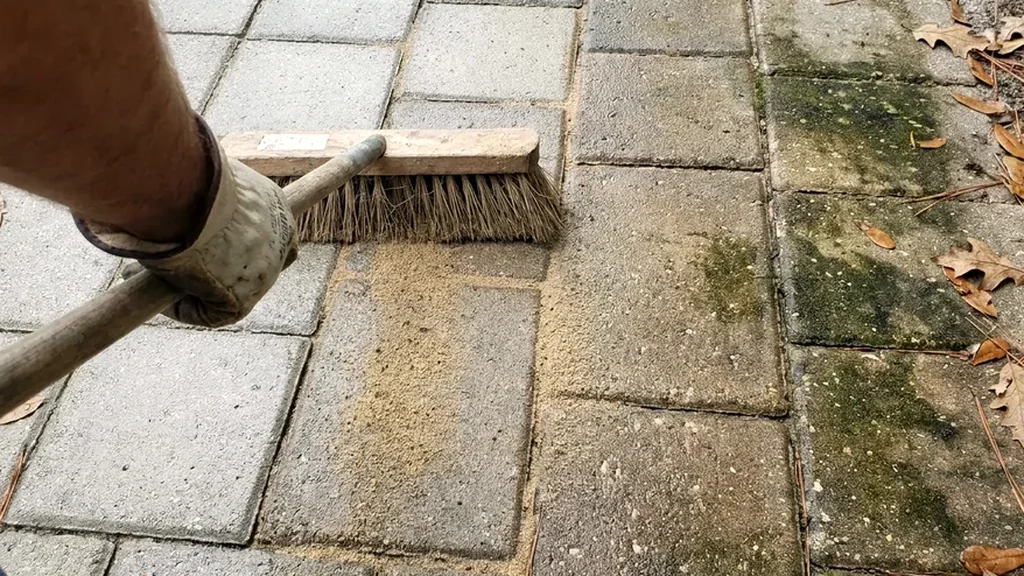
Brown leaf stains in the joints
A Jacksonville sealing company lists tannins from oak leaves among the stains that driveways pick up. Leaves that sit wet on light pavers leave brown marks a plain rinse will not lift. On a San Marco courtyard under trees, they collect where the leaves pile up. The stains get treated before the wash, since sealer would hold them in place for years. Raking or blowing leaves off the pavers every week or so keeps new marks from setting.
Color gone flat in full sun
Flat or chalky color, most of all in full sun, is one sign a surface is due, the same company says. Another Jacksonville company says a coat shields pavers from the sun as well as dirt, mildew and algae. On a San Marco lot with both sun and shade, compare the two areas to see how much color the sunny side has lost. A new coat brings back depth, and a wet look adds the most, though it shows scuffs sooner on a drive.
Joints washed out by heavy rain
Rainfall in San Marco tracks the city's newer normal of 53.4 inches a year, which grew most in the summer and fall months. Hard rain pulls sand from the joints, and once they run low the pavers can loosen and shift. Weeds then find room to grow. Fresh joint sand, held in by sealer, helps a San Marco walk keep its shape. After a storm, look for sand in the gutter at the foot of the drive, which shows where the joints are emptying.
Sealer from an owner long gone
San Marco lots sold from 1925 into the 1940s, so many homes have had several owners. One of them may have sealed the pavers with a product nobody can name now. Since a water-based product cannot sit on top of a solvent-based one, the contractor needs to know what that San Marco owner used. A coat that looks cloudy, patchy or peeling usually needs to come off. Keep any old cans, labels or receipts you find in the garage, since a product name can settle the question fast.
Do older San Marco homes and new Hendricks Avenue units need the same sealing plan?
Not quite, because the age of the pavers changes the first step. San Marco's first buildings went up in 1926, the First Addition followed in 1929, and lots kept selling into the 1940s. Pavers at those homes may carry several old coats, so the contractor tests before choosing a product. Mention roughly when your house was built when you get a free estimate online.
Along Hendricks Avenue, The Coastal reports well over 1,000 new residential units under construction or proposed. Newer pavers there may never have been sealed, which keeps things simple, with no old coat to match. A first coat still waits until the pavers are clean and fully dry. If you own one of these newer San Marco homes, call (904) 932-1301.
South of the original tract, Colonial Manor and South Riverside sit on the old Red Bank plantation, which Jacksonville annexed in 1937. The Red Bank Plantation House dates to 1857 and is still lived in. Saint Nicholas lies just to the east. Tell the contractor which part of San Marco you live in, then get a free estimate online.
What does paver sealing cost in San Marco?
The going rate that Northeast Florida companies commonly publish is $1.75 to $3.25 per square foot to clean, sand and seal San Marco pavers. In San Marco, root repairs, leaf stains and old coats are what move a job up inside that range. A flat, clean walk with no old coat sits closer to the low end. For a free figure on your pavers, get a free estimate online.
Setup counts as well. A pool deck takes extra care around filters and drains, and a courtyard behind a gate takes more setup than an open drive. One Jacksonville company prices by square footage, with porosity and dirt also changing the number. Call (904) 932-1301 and ask which of these apply to your San Marco lot.
| Paved area | Typical example | Clean, sand and seal |
|---|---|---|
| 300 sq ft | Small patio or walkway | $525 to $975 |
| 600 sq ft | Two car driveway | $1,050 to $1,950 |
| 1,000 sq ft | Large driveway or pool deck | $1,750 to $3,250 |
| 1,500 sq ft | Driveway plus pool deck | $2,625 to $4,875 |
Math based on the $1.75 to $3.25 per square foot that Northeast Florida paver companies published as of November 2026. Your contractor sets the actual price after seeing the surface. Repairs, leveling and stripping failed sealer are usually extra.
How does a paver sealing job work in San Marco?
Map the roots, stains and old coat
The contractor walks your San Marco pavers and marks lifted ridges, leaf stains and any old sealer. Low joints and weeds get noted as well. You see the plan and the price before anything starts. Nothing moves forward until you agree to it. Photos of each trouble spot make the plan easy to follow later.
Reset what the roots moved
Lifted or sunken sections come up and go back down on a rebuilt base. A Jacksonville company warns that a coat keeps whatever shape it is laid on, which is why this step comes first. Roots near a big oak may keep pushing over the years. Ask the contractor what to watch for near your San Marco trees. Edge pieces that have drifted get set back so the border holds tight.
Treat stains and wash
Leaf tannins, oil and rust get treated before the main wash. Then the surface and the joints are cleaned of dirt, growth and old sand. Pool filters, drains and nearby plants get covered. Some deep stains only lighten, and the contractor should say so before starting. On a San Marco lot, rinse water should be aimed away from the house and the neighbor's yard.
Re-sand and wait for dry pavers
Washing pulls the joint sand out, so new sand gets swept into every gap. The pavers then have to dry all the way through. Under San Marco's oaks, a shaded courtyard can take longer than a sunny drive. Sealing too soon can leave a cloudy coat. Picking a joint sand that matches the pavers helps a San Marco walk look whole.
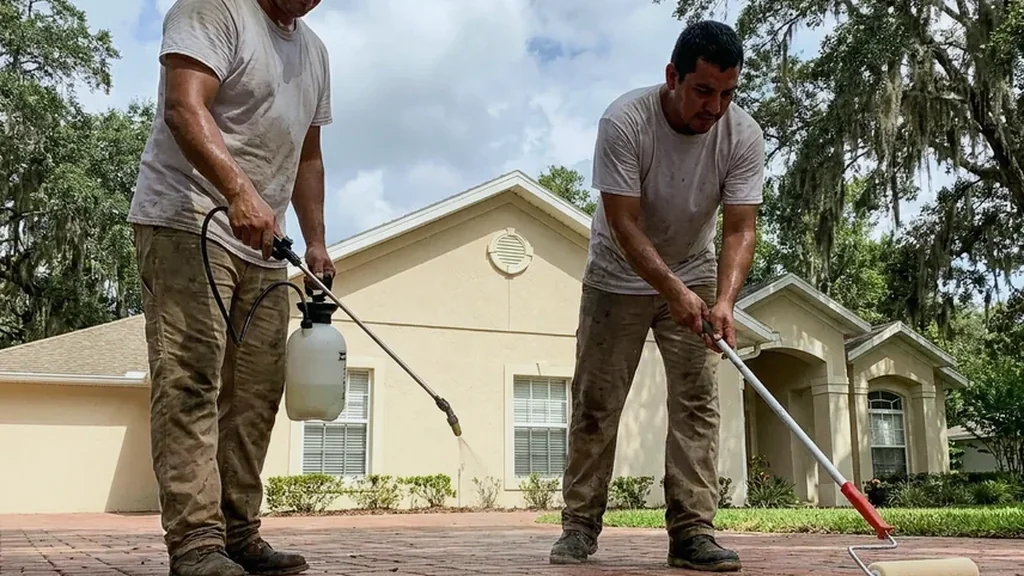
Seal in your finish
The sealer goes on in the finish you picked, natural or wet look. You can usually walk your San Marco pavers within a few hours, but give cars about a day. One Jacksonville company expects its coat to hold up for 3 to 5 years with care. Ask what your San Marco shade, leaf fall and traffic mean for that number. Turn off any San Marco irrigation that sprays the courtyard until the coat has fully set.
Complete paver services in San Marco
A San Marco job starts with repairs, since lifted or sunken pavers get reset before anything else. Then comes stain treatment, a full wash, new joint sand and a dry spell before the sealer. Skipping ahead would only lock problems in place under the coat. To ask how many days your layout needs, call (904) 932-1301.
Front walks under oaks take roots and leaf stains, while driveways take tires and oil drips. Courtyards and pool decks behind older homes see less traffic but more shade and leaf fall. One Jacksonville company says it covers pool filters and drains while it works. List each San Marco surface you want done when you get a free estimate online.
Sealer comes in water-based and solvent-based types, with a natural or wet look finish. On a home built before the 1940s, an earlier owner may have used either type, and water-based cannot go over solvent-based. A natural finish keeps pavers from competing with an older San Marco front. Call (904) 932-1301 to compare what fits your house.
Rain in Jacksonville has climbed most in summer and fall, so a sealing date in those months can move. A shaded courtyard under oaks may stay damp long after a sunny drive has dried. Sealer needs a dry surface, which means a careful contractor waits rather than rushing. For a date that works on your San Marco street, get a free estimate online.
Questions to ask before you hire
- When do you collect payment, and do you need anything to hold my date?
- What happens if an afternoon storm rolls in while the sealer is still wet?
- This close to the ocean, when do you think the pavers will need sealing again?
- If some spots dry white or cloudy, will you come back and correct them?
- Can you tell me the name of the sealer you use and why it suits pavers like mine?
- Would you show me how the sealer looks on a few pavers before you do the rest?
- How do you keep spray off my shrubs, my pool cage and the side of the house?
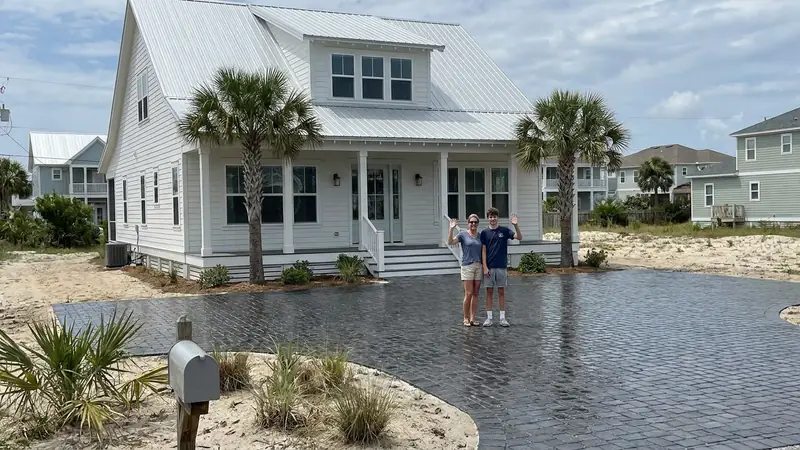
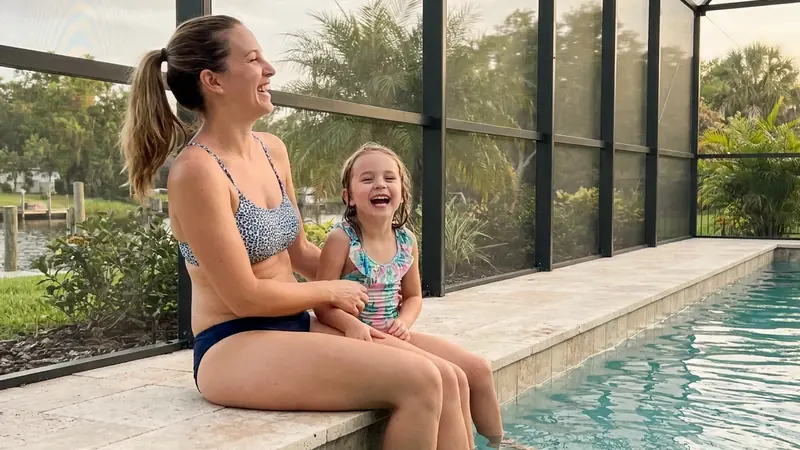
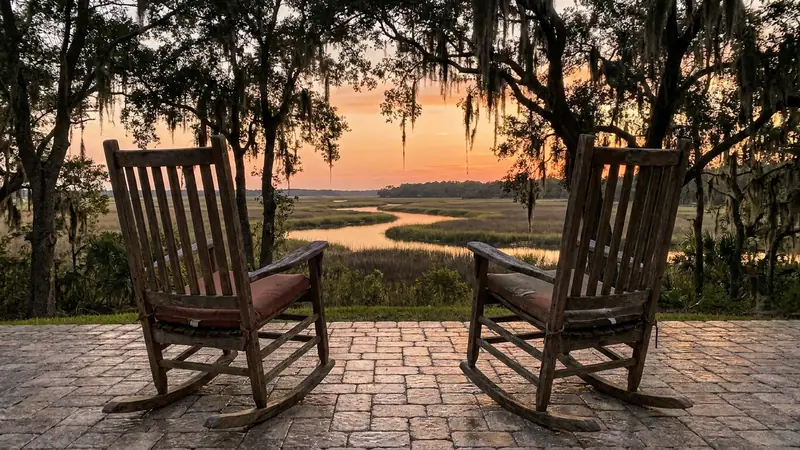
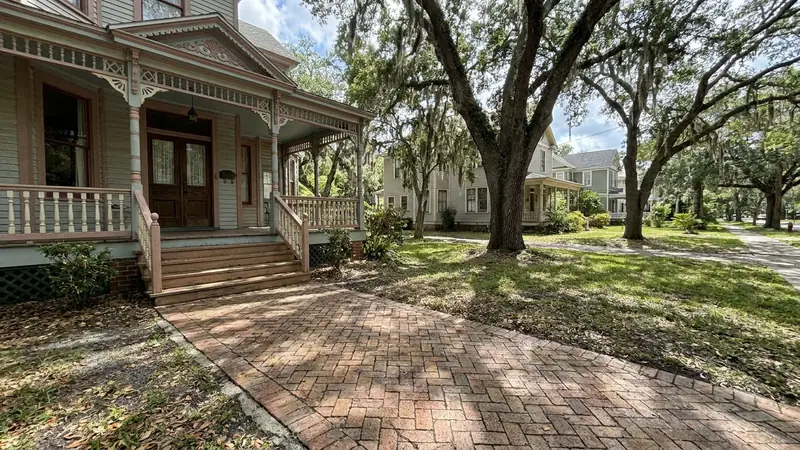
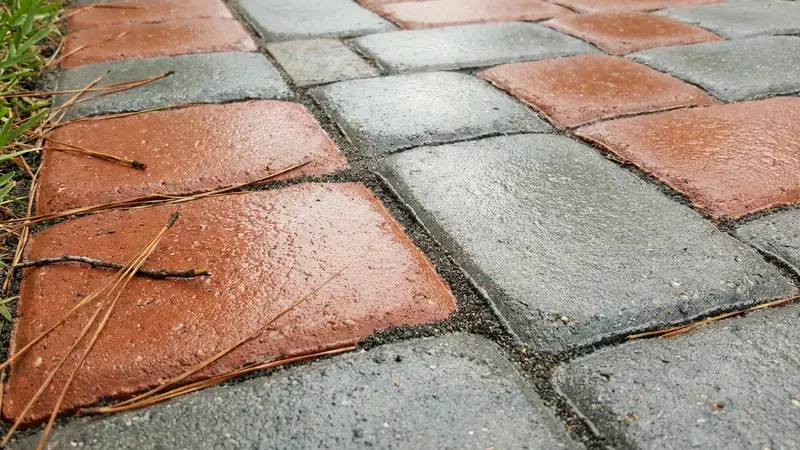
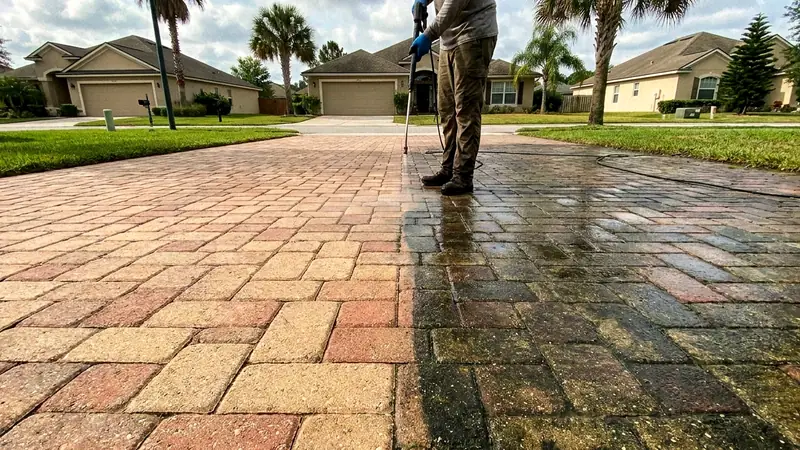
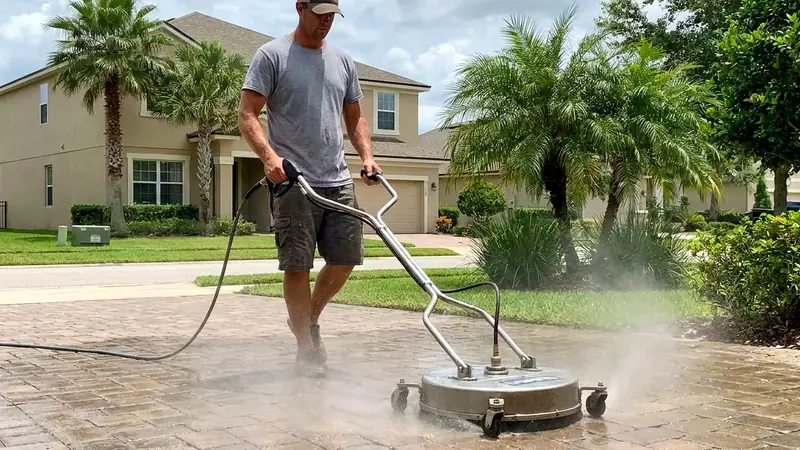
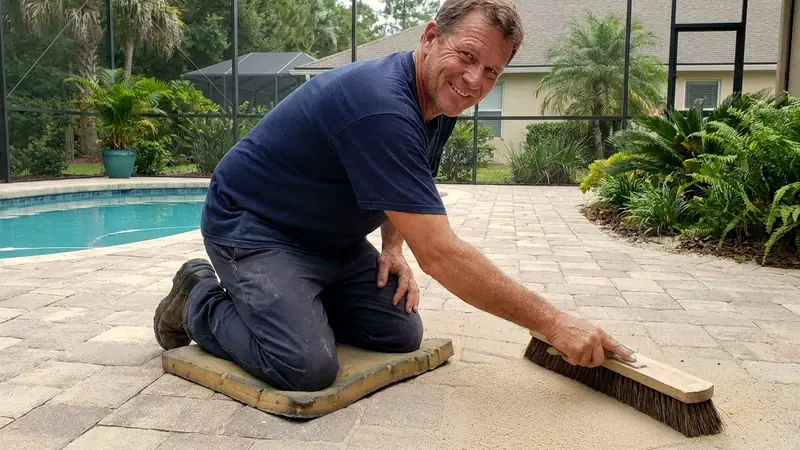
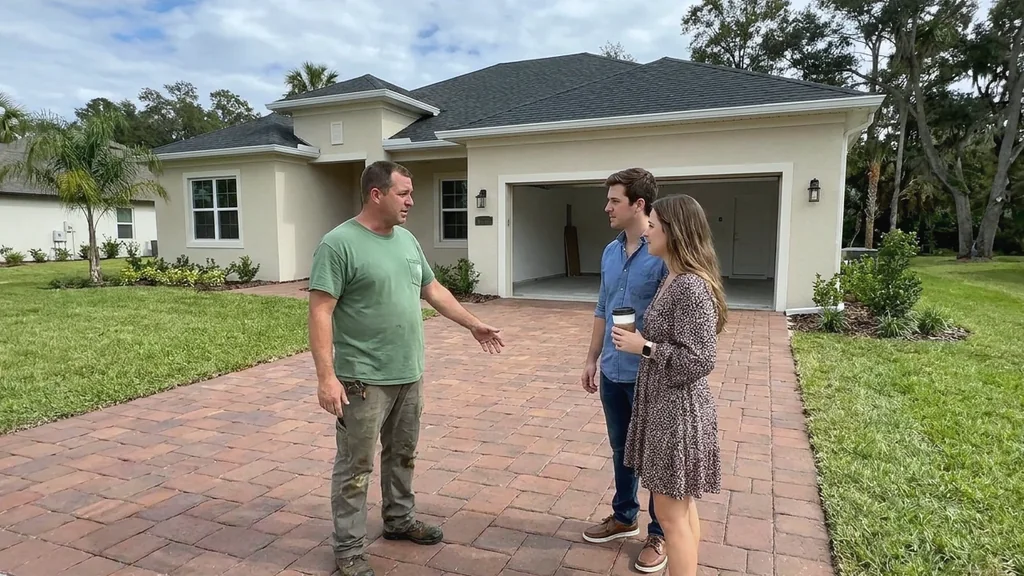
What do sealed pavers look like around San Marco?
Why local matters in San Marco
A contractor who knows San Marco expects oak roots and leaf stains, and plans repair time into the quote. Someone used to new suburban drives may price only a wash and a coat. That gap shows up later as a ridge under fresh sealer. To reach a contractor who knows these older streets, call (904) 932-1301.
Local knowledge also helps with the mix of ages here, from 1920s homes near the Square to newer units along Hendricks Avenue. Each calls for a different first step, depending on what coat is already down. A contractor who works the area asks about that at the start. You can get a free estimate online and describe your home in a sentence or two.
Timing is part of it too. Rain in Jacksonville has risen most in summer and fall, so a nearby contractor can jump on a dry week when one opens up. You still choose the finish, the date and whether to go ahead. When you get a free estimate online, ask how the forecast could shift your San Marco job.
How long has San Marco been a neighborhood?
More than a century, since the area began as the town of South Jacksonville, incorporated in 1907 with about 600 people. The Florida East Coast Railway bridge had crossed the river in 1890, and Atlantic Boulevard opened toward the beaches in 1910. San Marco itself broke ground in 1925, and its 250 lots sold within three hours. If you live near those first blocks, call (904) 932-1301.
On the Southbank, once part of South Jacksonville, Dixieland Park opened in 1907 around the tree now called the Treaty Oak. Jessie Ball duPont gave the land around it to the city in 1964, and the oak last measured 70 feet tall. Back at San Marco Square, the art deco San Marco Theatre opened in 1938. Near any of these San Marco landmarks, you can get a free estimate online.
Frequently Asked Questions
Are patio pavers supposed to be sealed in San Marco?
They do not have to be, but sealing helps them last. One Jacksonville company says a coat guards against sun, dirt, mildew, algae and wear. Under San Marco's oaks, it also keeps new stains on top long enough to rinse off. A sealed patio also holds its joint sand better through summer storms.
What does it cost to seal pavers in San Marco?
For San Marco pavers, Northeast Florida companies commonly publish $1.75 to $3.25 per square foot to clean, sand and seal. Root repairs, deep leaf stains and an old coat push a San Marco job higher in that range. The estimate is free, so you can see your own number first. Get the measured San Marco square footage on paper before you compare bids.
Why is paver sealing so expensive in San Marco?
Most of the price is labor. Resetting root-lifted pavers, treating stains, washing and re-sanding all come before the sealer, and one Jacksonville company plans two days for each job. Older San Marco lots often need more of that prep. The sealer itself is a smaller share of the bill than most people expect.
How often do you need to reseal pavers in San Marco?
Companies commonly quote two to five years between coats, and one Jacksonville company expects 3 to 5 years with care. Heavy shade and leaf fall can push a San Marco courtyard toward the shorter end. Flat color and low joints are signs it is time. Water that soaks in and darkens the pavers, instead of beading, is another clue.
Can pavers lifted by oak roots be sealed?
Yes, but only after they are reset. A sealer locks in whatever shape the surface has, so the ridge has to come out first. The contractor lifts the pavers, rebuilds the base and lays them back level before sealing. If a root keeps growing, the same spot may need attention again down the road.
Should new pavers at a Hendricks Avenue home be sealed right away?
Not right away, since one Jacksonville company suggests waiting 30 to 60 days after install. After that, they can be sealed once clean and fully dry. New pavers with no old coat are the simplest case, since there is nothing to match. The contractor still washes the surface and fills the joints before the first coat. Ask the builder or installer whether a coat was ever applied, so the right product goes on.
How long should cars stay off newly sealed pavers?
Plan on about a day for cars, while walking can usually start a few hours after the coat goes on. A Jacksonville company that works two days per job adds about a day of drying before its customers use the pavers. Ask for the cure time of the product going on your San Marco drive. Most San Marco owners park on the street for that night.
Will sealer hide the brown leaf stains on my San Marco walk?
No, sealer would lock them in. Tannin stains get treated before the wash, and most fade a lot. Some deep marks may only lighten, so ask about them at the estimate. Once the coat is on, fresh leaf marks rinse off more easily if you catch them early.
Nearby areas we serve
Ready for a Free Estimate in San Marco?
Call (904) 932-1301 and tell us about your pavers.
Free, no obligation